Recycling and Sustainability — Lawn Mowing Staines
 Lawn Mowing Staines is committed to an eco-first approach across all services. Our local lawn care operations are designed to reduce waste, lower emissions and return useful materials to the circular economy. We view every grass clipping, branch and turf strip as a resource rather than refuse. By combining careful on-site separation with strategic partnerships, our aim is to set a high standard for green waste management in and around Staines and nearby boroughs.
Our sustainability plan includes a clear recycling percentage target — we aim to divert at least 70% of all generated green and garden waste from landfill within the next three years. That target covers mulched grass, wood chippings, soil returned to gardens and any recyclable packaging or metals encountered during work. Lawn mowing in Staines must go hand in hand with responsible disposal to make a measurable climate difference.
 Garden and green waste separation follows the approach promoted by local boroughs: segregate garden waste, food scraps (where collected), dry recycling and residual waste. Our crews follow the boroughs’ guidance and use on-site bins and bags so that materials arriving at transfer points are already sorted. Typical recycling activities we handle include:
- Chipping branches for mulch and biomass use
- Composting grass clippings and shrub trimmings
- Segregating metals (fence posts, lawnmower parts) for metal recycling
- Separating plastic pots and trays for the correct recycling stream
Local transfer stations and civic facilities
We make use of local transfer stations and household recycling centres operated by Surrey County Council and neighbouring boroughs, ensuring green waste goes to the right processing stream. Where possible, materials are taken to facilities that accept garden waste for composting, anaerobic digestion or biomass fuel. Our logistics team monitors which civic amenity sites and commercial transfer stations are operating the best disposal routes so that Staines lawn care waste is processed quickly and responsibly.
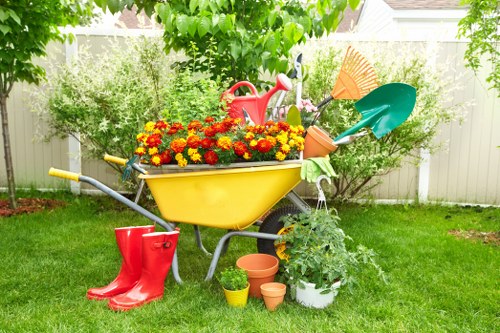 Route optimisation plays a key role in reducing our footprint. Rather than frequent small trips to multiple sites, we consolidate loads and choose the nearest appropriate transfer station or recycling centre. This reduces mileage, saves fuel and improves the carbon profile of our service. Our operators use route planning software and coordinate with local facilities to minimise round-trips and waiting time.
We also keep a simple waste log for every job: type of waste collected, destination transfer station, and the approximate weight diverted. That record helps us track progress toward our recycling goals and ensures transparency for contractual and environmental reporting for larger commercial contracts involving grounds maintenance.
Partnerships, community benefits and charity links
Partnerships with local charities and community groups are central to our sustainability approach. Rather than discarding reusable turf, plants or toolable items, we coordinate donations to community gardens, allotment groups and environmental charities. These partnerships mean useful organic matter and materials are repurposed to support urban biodiversity, community food growing and local amenity improvements. Lawn Mowing Staines works with local volunteers to identify where donations will have the greatest community impact.
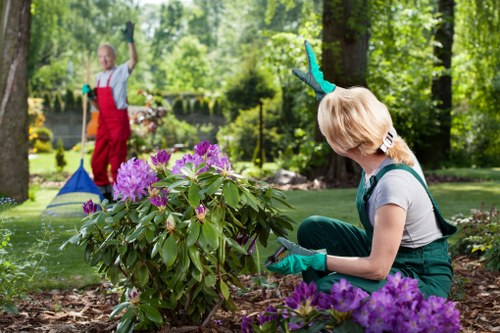 We also engage with social enterprises that accept timber offcuts and pallets for upcycling, and with wildlife charities that can put piles of brash to habitat use for insects and small mammals. These collaborations reduce landfill load and create local social value—turning routine maintenance into a resource stream that benefits people and nature.
 To support reuse, we maintain an inventory of reusable items recovered during jobs and a coordination process to offer them to partner organisations. This process includes sterilisation of plant pots where required, safe removal of usable turf and gentle handling of native plants destined for rehoming.
Low-carbon vans and equipment upgrades are another pillar. Our fleet includes hybrid and electric light vans used for smaller crews, and we deploy the most efficient diesel alternatives for heavier towing with the aim to transition to a low-emission fleet over time. Vehicle telematics, regular maintenance and eco-driving training are standard to keep emissions low while ensuring reliable service across the Staines and Spelthorne area.
Equipment choices also reflect our sustainability goals: mulching mowers reduce collection needs by finely shredding clippings in situ, and battery-powered strimmers cut noise and local air pollution. Together these measures reduce fuel consumption and the volume of material needing transfer or processing.
Reporting and continuous improvement are built into our operations. We publish annual metrics on diversion rates and fleet emissions, and we set incremental targets to reach net reductions year-on-year. By focusing on practical actions — diversion to composting, reuse via charities and low-carbon transport — our Staines lawn maintenance services deliver greener neighbourhoods and a smaller environmental footprint.